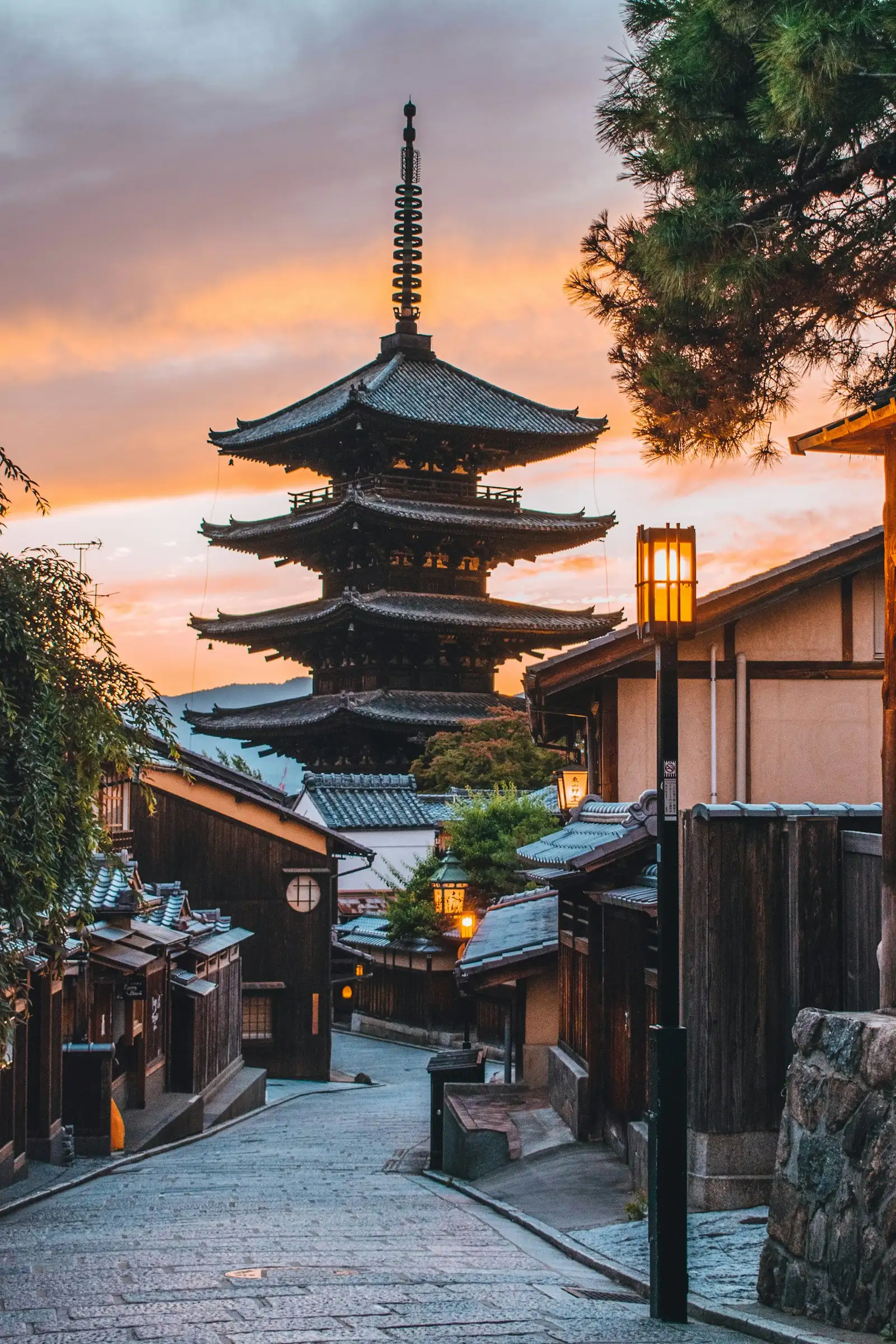
Gion is Kyoto’s largest geisha district: the stone-paved Hanamikoji street, the willow-lined Shirakawa canal, and Yasaka Shrine at the eastern end, all walkable and free. In the early evening you may see maiko and geiko walking from their lodgings to engagements — but after years of tourists chasing them, the private lanes off Hanamikoji are now closed to photography. This guide covers how to get there, an evening walking route, and the etiquette that keeps the district open to visitors.
TOC
Quick facts
| Item | Details |
|---|---|
| Cost | Free to walk (Kennin-ji temple ¥800; Yasaka Shrine free) |
| Best time | 17:00–19:00, when lanterns are lit and maiko head to work |
| Nearest station | Keihan Gion-Shijo (1 min), Hankyu Kyoto-Kawaramachi (5 min) |
| Time needed | 1.5–2 hours |
| Official info | Gion Shopping Street Association |
How to get to Gion
- Keihan Line: Gion-Shijo Station exit 6 puts you on Shijo-dori. Use this from Fushimi Inari or Kiyomizu-dera.
- Hankyu Line: Kyoto-Kawaramachi Station, then cross the Shijo bridge, 5 minutes. From Osaka.
- City Bus 206 from Kyoto Station to the Gion stop, about 20 minutes.
- On foot from Kiyomizu-dera via Sannenzaka and Ninenzaka, about 20 minutes downhill.
Evening walking route
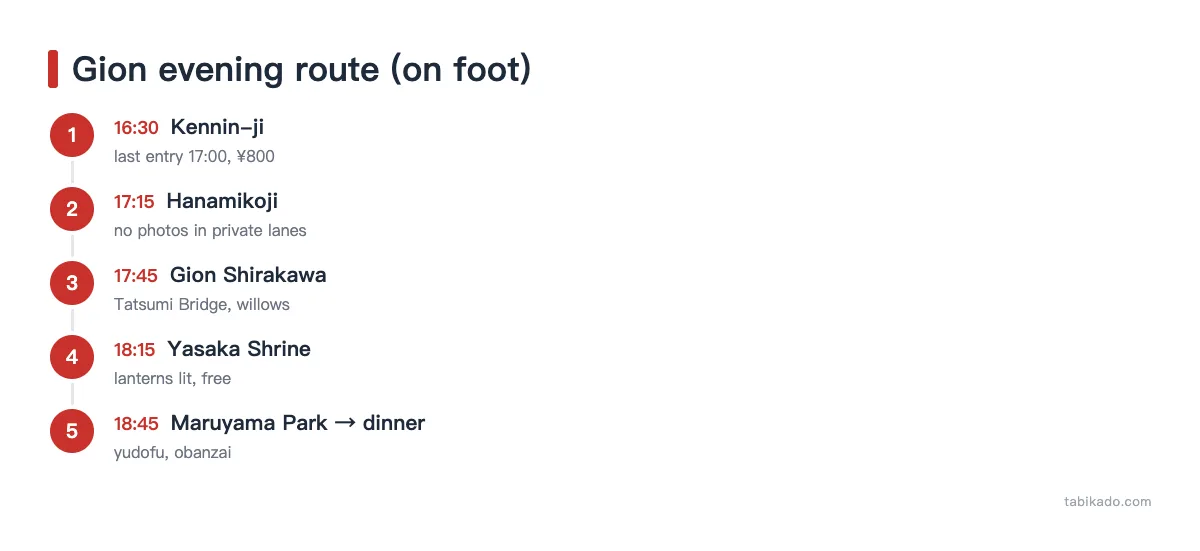
- 16:30 Kennin-ji — Kyoto’s oldest Zen temple, with the Wind and Thunder Gods screen and a dry garden. ¥800, last entry 17:00.
- 17:15 Hanamikoji north — lattice windows and bamboo “inu-yarai” fences of the teahouses. No photography in the side lanes.
- 17:45 Gion Shirakawa — Tatsumi Bridge and the small Tatsumi shrine; willows, stone paving, cherry trees in spring.
- 18:15 Yasaka Shrine — open 24 hours. The lanterns on the dance stage are lit at dusk.
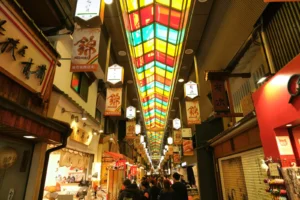
- 18:45 Through Maruyama Park, then dinner in Gion or over at Nishiki Market.
Geisha etiquette
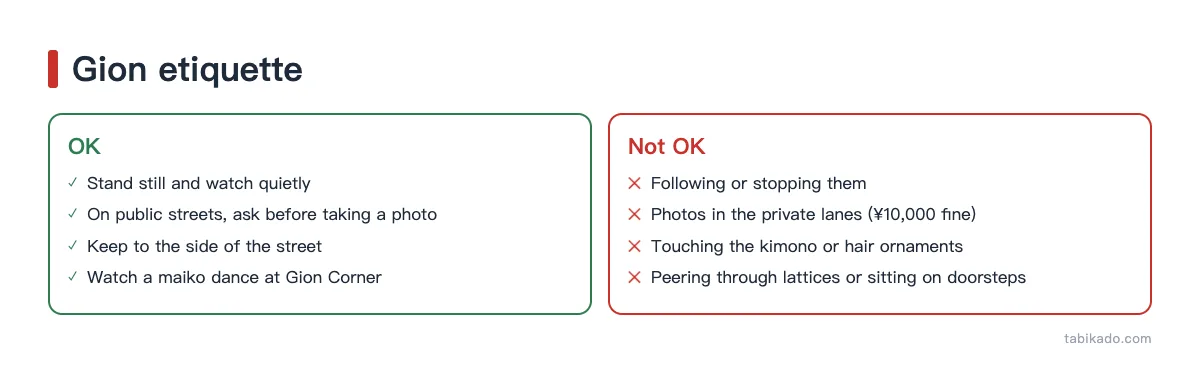
- Do not follow or stop them: they are on their way to work. Stand still and watch.
- No photos in the private lanes: signs on the alleys off Hanamikoji say so, with a reported ¥10,000 fine.
- On public streets, ask first: if they decline, that is the answer.
- Never touch the kimono or hair ornaments: they are real and extremely expensive.
- Many “maiko” in daytime are tourists in a makeover experience. Real maiko are rarely on the street before 17:00.
Where to eat in Gion
- Yudofu and obanzai: old restaurants in the lanes off Hanamikoji. Book ahead for dinner.
- Matcha desserts: famous shops on Shijo-dori; long queues at lunchtime.
- Kushikatsu and izakaya: around Keihan Gion-Shijo Station, fine for solo diners.
- Real teahouses do not accept walk-in guests. For a one-hour taste of maiko dance, tea ceremony and other arts, Gion Corner runs nightly shows (¥6,600).
[Affiliate slot: Gion evening guided walk, Gion Corner tickets — Klook / KKday]
Tips
- Cars use Hanamikoji too; do not stand in the middle of the street for photos.
- July is the Gion Matsuri: Shijo-dori is pedestrianised around the float processions on the 17th and 24th.
- Early April: cherry blossom illumination along Gion Shirakawa.
- The machiya are homes as well as shops; do not peer through the lattices.
Nearby
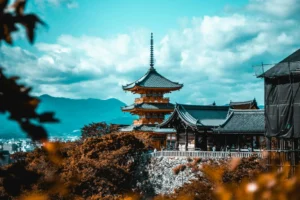
- Kiyomizu-dera — 20 minutes on foot
- Nishiki Market — 15 minutes west along Shijo-dori
- Fushimi Inari — 10 minutes by Keihan
See also the full list of things to do in Kyoto and the 3-day Kyoto itinerary.
Official information: Gion Shopping Street Association · Yasaka Shrine · Kennin-ji · Google Maps
Comments