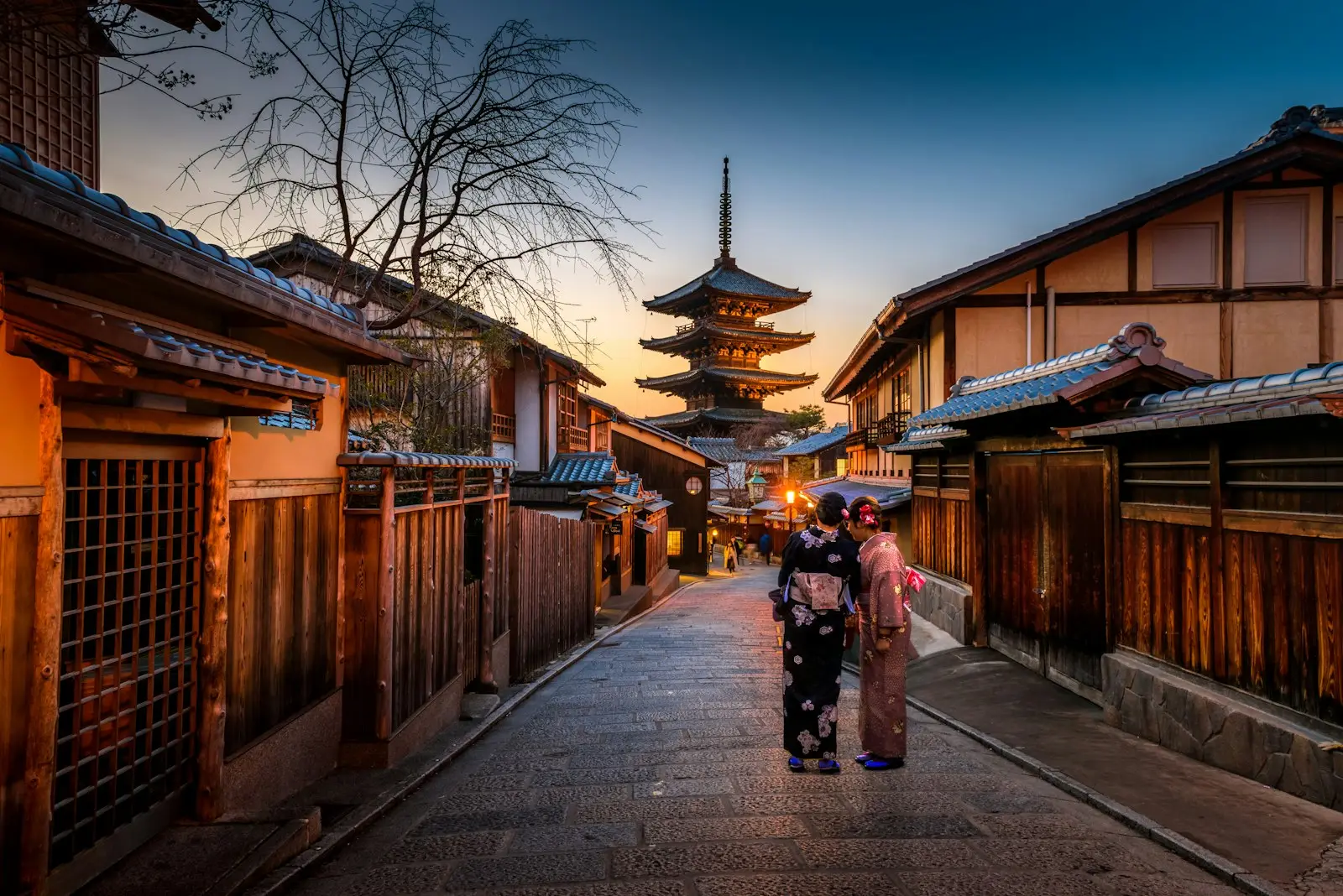
Walking the slopes to Kiyomizu-dera or the stone lanes of Gion in a kimono is Kyoto’s most popular experience, and there are over a hundred rental shops in the city. Expect ¥3,000–8,000 with dressing included; you pick it up in the morning and return it in the evening. This guide explains what the price includes, the flow from booking to return, which area to rent in, and how to actually walk in one.
Prices
| Plan | Typical price | Includes |
|---|---|---|
| Basic | ¥3,000–4,000 | kimono, obi, accessories, dressing, zori sandals, drawstring bag |
| Standard | ¥5,000–7,000 | wider choice of kimono plus hair styling |
| Premium (furisode, antique) | ¥8,000–15,000 | silk, long-sleeved furisode, antique patterns |
| Men (kimono, hakama) | ¥3,000–6,000 | kimono, haori jacket, obi, setta sandals |
| Couples | ¥6,000–12,000 | two sets at a discount |
Options: hair styling ¥1,000–2,000, next-day return ¥1,000–2,000, lace or retro patterns about ¥1,000 extra. Based on published shop prices as of October 2026.
From booking to return
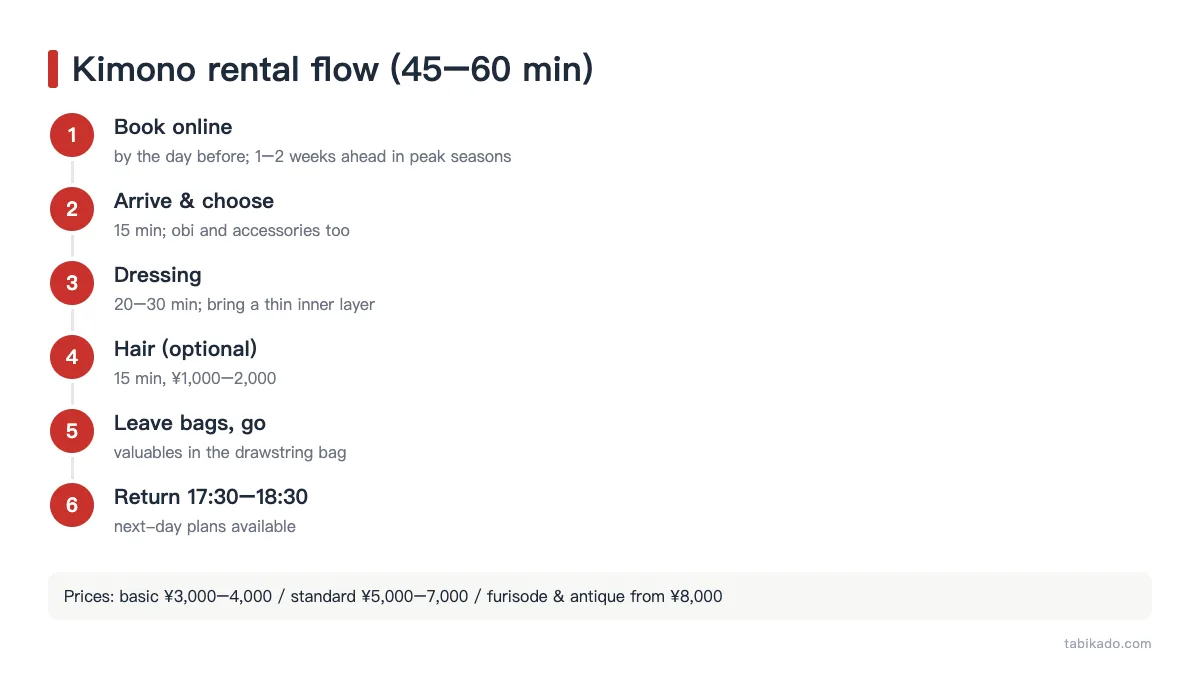
- Book online by the day before — in cherry, autumn and weekend seasons, slots go 1–2 weeks ahead. Choose a time slot.
- Arrive and choose (15 min) — pick from the racks in your plan, then the obi, cord and bag.
- Dressing (20–30 min) — staff dress you. Wear a thin T-shirt and leggings underneath for comfort.
- Hair (15 min) — optional; hair ornaments are lent by the shop.
- Leave your bags and go — luggage in the shop’s lockers; valuables in the drawstring bag.
- Return by about 17:30–18:30 — change back at the shop. Next-day plans let you wear it back to your hotel.
Count 45–60 minutes from arrival to stepping out. A 9:00 booking has you walking by 10:00.
Which area to rent in
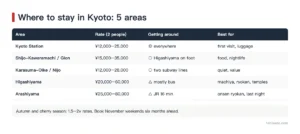
- Kiyomizu-dera / Gion (Kiyomizu-Gojo to Gion-Shijo): the most shops, and Kiyomizu-dera, Sannenzaka, Yasaka Pagoda and Gion are all walkable in kimono. Start here if it is your first time.
- Kyoto Station: handy on arrival or departure day, but you need a bus to reach the sights.
- Arashiyama: a few shops by Randen Arashiyama Station. If you are spending the day at the bamboo grove and the bridge.
- Fushimi Inari: a few shops by the station. Gates plus kimono is popular, but sandals and the mountain stairs do not mix.
How to walk in a kimono
- Small steps, toes slightly in — the hem stays closed.
- Lift the hem lightly on stairs — the Kiyomizu slope and the Fushimi steps especially.
- Go to the toilet early — it takes time in kimono.
- Eat as if you will spill — skip ramen and sauces; obanzai and sweets are safe.
- Hot in summer, cold in winter — yukata plans in summer; a shawl and thermal layers in winter.
- Rain: borrow an umbrella from the shop. Silk shrinks when wet, so choose lace or polyester on wet days.
- No bicycles or scooters. Buses and trains are fine.
Where to take photos
- Ninenzaka with the Yasaka Pagoda behind you
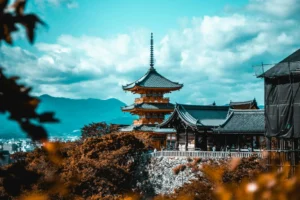
- In front of the three-storey pagoda at Kiyomizu-dera
- Tatsumi Bridge on the Gion Shirakawa canal
- The Senbon Torii at Fushimi Inari (early morning)
- The Arashiyama bamboo grove (early morning)
[Affiliate slot: Kyoto kimono rental booking — Klook / KKday]
FAQ
- Sizes? Most shops fit heights of 145–175 cm with roomy sizes available; check ahead if you are taller or larger.
- Children? Many shops have kids’ kimono from age 3. Busy around the Shichi-go-san festival in November.
- If I stain it? Ordinary marks are free; heavy stains or damage are charged. Optional insurance is ¥300–500.
- Men too? Nearly every shop has men’s plans; hakama about ¥1,000 extra.
Fit it into day 1 of the 3-day Kyoto itinerary for Higashiyama, and see 15 things to do in Kyoto.
Official information: Kyoto City Official Travel Guide · Kyoto tourism etiquette


Comments