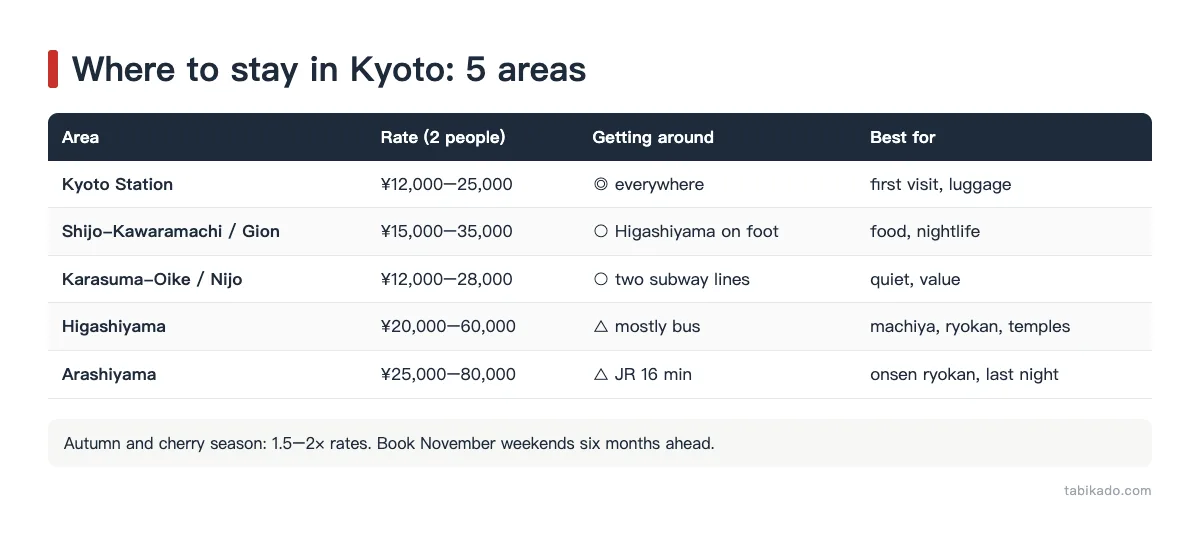
Kyoto’s sights are spread east and west across the city, so the neighbourhood you sleep in changes your daily transit time by an hour. The short answer: Kyoto Station for a first visit and easy transport, Shijo-Kawaramachi to Gion for food and evenings, a Higashiyama machiya or Arashiyama ryokan for atmosphere. Here are the five areas compared by price, access and who they suit.
Five areas compared
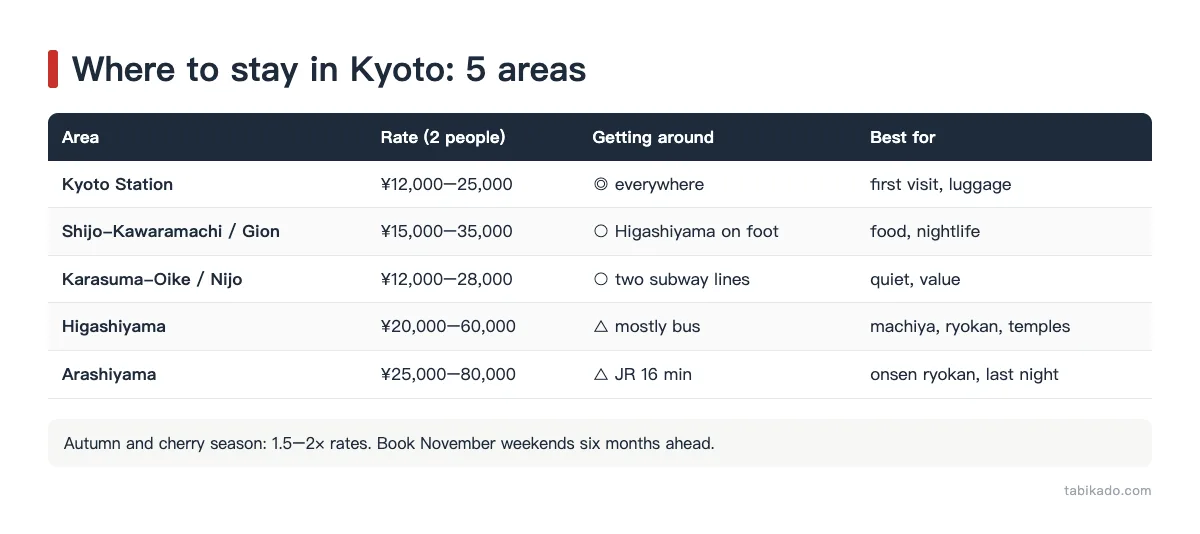
| Area | Typical rate (2 people, 1 night) | Getting around | Best for |
|---|---|---|---|
| Kyoto Station | ¥12,000–25,000 | ◎ buses and trains everywhere | first visit, luggage, day trips |
| Shijo-Kawaramachi / Gion | ¥15,000–35,000 | ○ Higashiyama on foot, NW by bus | food, nightlife, shopping |
| Karasuma-Oike / Nijo | ¥12,000–28,000 | ○ two subway lines cross | quiet, good-value business hotels |
| Higashiyama (Kiyomizu, Okazaki) | ¥20,000–60,000 | △ mostly bus | machiya, ryokan, early temple walks |
| Arashiyama | ¥25,000–80,000 | △ JR 16 min; quiet at night | onsen ryokan, dawn bamboo walks |
Rates are typical for off-peak as of October 2026. Autumn leaves (November) and cherry blossom (early April) run 1.5–2×, as do Golden Week and New Year.
Kyoto Station
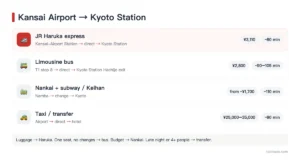
- Shinkansen, the Haruka airport express and the main bus terminal are all here; direct from Kansai Airport.
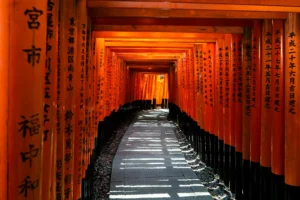
- Fushimi Inari is 5 minutes by JR, Arashiyama 16, Nara 45.
- Large hotels on the Hachijo (south) side, business hotels north of the Karasuma exit.
- Evening food is mostly in the station building and underground mall — convenient, not atmospheric.
Shijo-Kawaramachi and Gion
- Nishiki Market, Pontocho and Gion are all walkable. Being able to walk home after dinner is the big plus.
- Keihan and Hankyu lines serve Fushimi Inari, Kiyomizu-dera and Osaka.
- Kinkaku-ji and Arashiyama need a bus or a change of train.
- Rooms over the Kamo River have the view, and the price to match.
Karasuma-Oike and Nijo
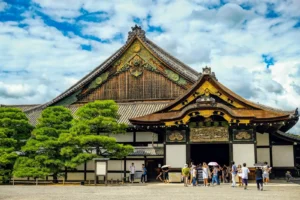
- Where the Karasuma and Tozai subway lines cross. Nijo Castle is walkable.
- No tourist bustle; cafés and machiya restaurants scattered around.
- Plenty of business hotels, the best value in the city.
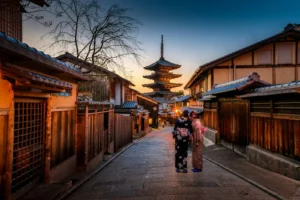
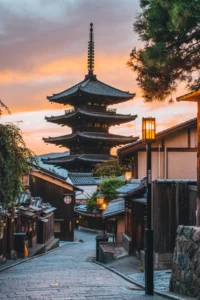
Higashiyama (Kiyomizu, Okazaki, Nanzen-ji)
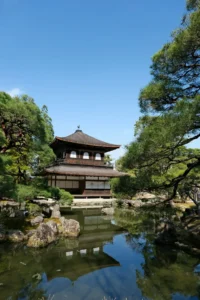
- Walk to Kiyomizu-dera or Ginkaku-ji first thing in the morning.
- Whole-house machiya rentals and ryokan; the most “Kyoto” stay.
- Restaurants close early, so eat on the Gion side and walk back.
- Hilly. Take a taxi with big suitcases.
Arashiyama
- Onsen ryokan along the river by Togetsukyo Bridge. You get Arashiyama after the day-trippers leave.
- A dawn walk in the bamboo grove is the guests’ privilege.
- 16 minutes to the city by JR, but awkward for other areas. The usual pattern is one special night at the end.
Quick decision guide
- First visit, 3 days, luggage → Kyoto Station
- Food and evening walks → Shijo-Kawaramachi to Gion
- Quiet and good value → Karasuma-Oike
- Ryokan or machiya atmosphere → Higashiyama
- One special last night → Arashiyama
[Affiliate slot: Kyoto hotels and ryokan — Agoda / Booking.com / Trip.com]
Booking tips
- Book 3–4 months ahead for autumn leaves and cherry blossom; November weekends sell out six months out.
- Kyoto’s accommodation tax (¥200–1,000 per night, rising to a maximum of ¥10,000 from March 2026) is usually paid at the property.
- For machiya rentals, confirm the check-in method (key box etc.) in advance.
- Ryokan rates double with dinner included; book room-only if you plan to eat out.
See also the 3-day Kyoto itinerary and 15 things to do in Kyoto.
Official information: Kyoto City Official Travel Guide — accommodation · Kyoto City accommodation tax
Comments